History of the College
Est. 1862 as an Anglican teacher training college for women
Lincoln Diocesan Training College (LDTC), now known as Lincoln Bishop University...
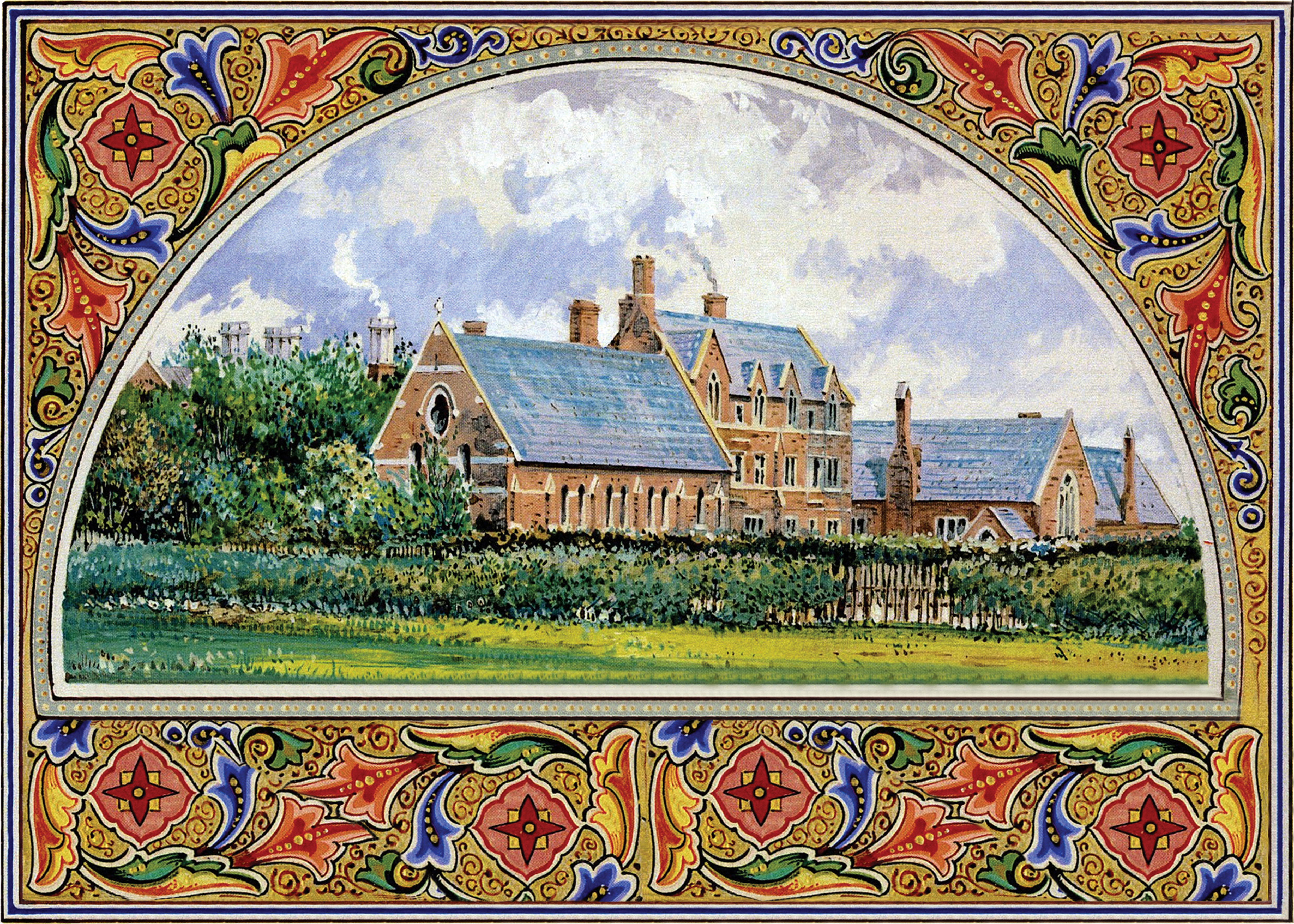
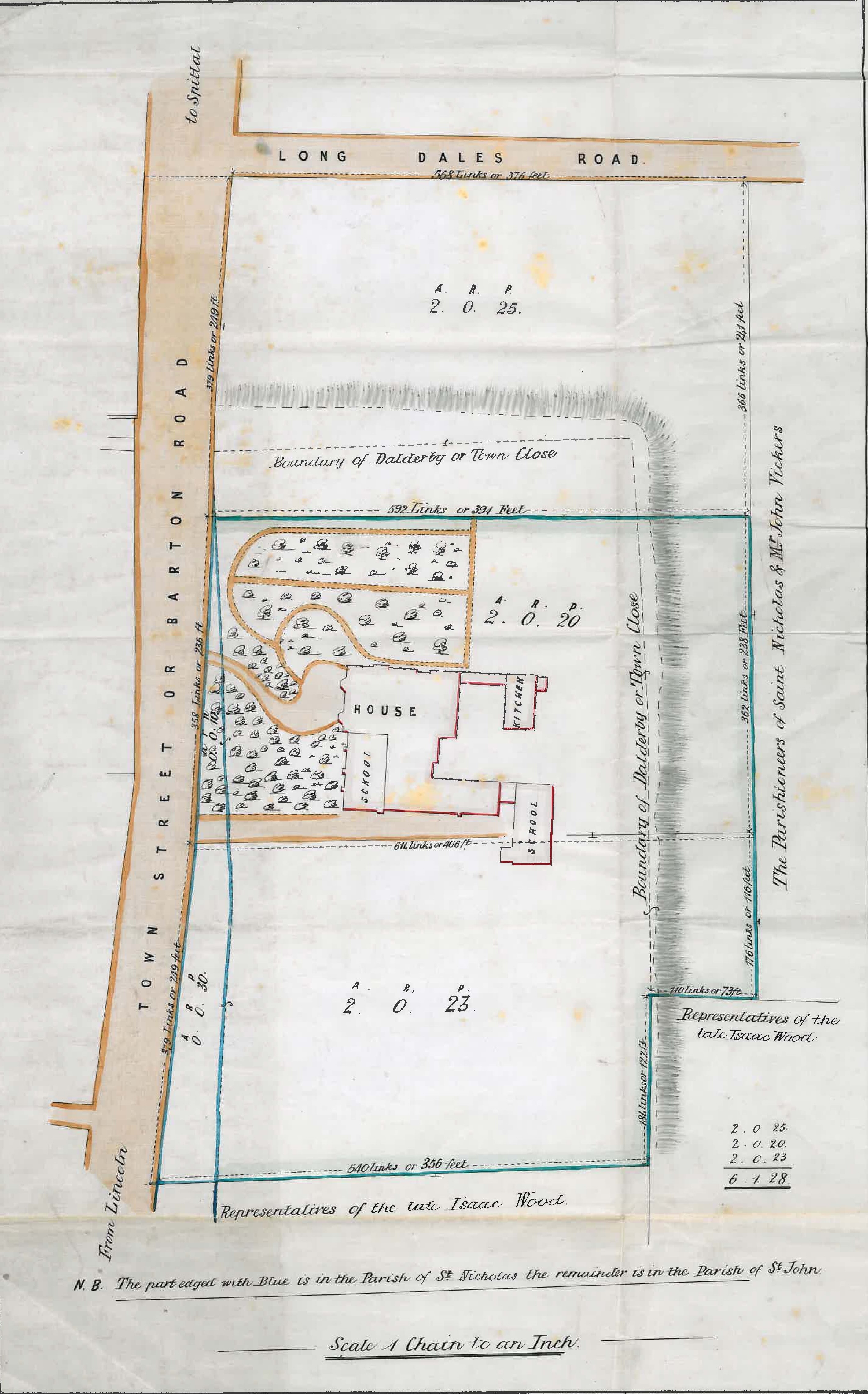
Lincoln Diocesan Training College (LDTC), now known as Bishop Grosseteste University, famed for over a century as a teacher-training college for women, was originally conceived as a training college for men. The original building on (what is now called) Newport Road was erected in 1842 to house a teachers’ training school for men, but this closed in 1853 due to lack of interest from prospective students.
The effort to reconstruct the site and attempt to successfully establish a training school in Lincoln Diocese was led by Bishop of Lincoln John Jackson. Around £3,000 was spent on the refurbishment of existing buildings and in 1862 the College re-opened its doors, this time to young female aspirants, making it the 23rd such institution in the country.
The first decades
The first cohort to graduate from the College numbered just 17 students. This rose to an average of 20 students for the first 35 years until internal and external pressures led to a significant expansion. In spite of the significant investment in the physical site to get it up and running, the early college was an austere affair, even for the period. The buildings contained a dedicated lecture hall, classroom and dormitory but no common area for unsupervised leisure, no easy chairs, no chapel and no dedicated bathing room. The dormitories were unheated and independent study was effectively prohibited. The early life of the college was one of long, collective study and hard physical work, with students taking on cleaning, housekeeping and duties in the kitchen garden. The students were kept extremely busy in a tough and controlled but productive and ultimately happy environment, if alumni testimonies are to be believed.
The students were used to this kind of labour and work schedule having come from working-class households and had served their apprenticeship in the profession as ‘pupil-teachers’ from the age of 13 to 18 whilst living at home and fulfilling the roles expected of young women in the household. Those who made it to Lincoln Diocesan Training College were those who had performed exceptionally well and earned a ‘Queen’s Scholarship’ entitling them to free board, lodging, laundry and limited medical care.
The first principal of the College was Canon Hector Nelson, who cultivated and celebrated a small-scale, hard-working, paternalistic environment at Lincoln and during his long tenure (1862-92) resisted the urge to expand, evidently preferring to be highly selective with applicants and to retain a confined, familial and austere atmosphere.
The College Chapel
The Elementary Education Act of 1870 drove the College to construct a chapel to underline its Anglican identity in contrast to other, newly permitted non-denominational schools. Prior to this, the College had no comfortable place for prayers as the lecture hall was forced to serve as both prayer room and sitting room.
The Chapel project was supported and instigated by the new Bishop of Lincoln, Christopher Wordsworth. Mr A. W. Blomfield of London was selected as architect, and the building company was Messrs. Otter and Elsey of Lincoln. The memorial stone was laid on 24 August 1871 by Mrs Wordsworth and first services held in summer 1872.
The furnishings for the Chapel were accumulated piecemeal long into the twentieth century. The student magazines and archives make note of the multiple charity events and donations that raised funds for the altar (donated by Canon Nevile), organ, carpets and linens (Canon Nelson’s family), candlesticks (Bishop Wordsworth), vases, altar accoutrement, stained glass windows, lectern and various brass panel dedications.
The first of the brass panel dedication was installed in 1889 for Miss Sophie Smith, governess since 1869. Another notable panel honoured Miss Elwell, student in 1871-73 and then teacher and governess for 39 years, who was central to charitable fundraising in the early years of the College, notably the garden party of 1902 that enabled a replacement organ to be purchased for the Chapel at a cost of £275 from Messrs. Binns of Leeds. The Chapel lectern that remains in situ today was dedicated to her in 1938 and made by her great nephew.
Another testament to the strong traditions and loyalties that the College inspired was the practice of graduating cohorts ‘gifting a window’ for the chapel, which occurred on a yearly basis from the end of the nineteenth century and morphed into related annual acts of charitable giving to the institution.
‘So year by year, what is and what should be the centre of our College life has been and is being enriched and made more beautiful.’ (Student Magazine entry, April 1897)
Transition and expansion, 1880-1900
The austere regime of Canon Nelson increasingly placed the College at odds with changing technologies and expectations around living standards in the late nineteenth century. Government inspectors demanded improvements in the physical comfort and hygiene standards of the site. A report from Canon Warburton in 1881 had demanded installation of a cold water tap upstairs, a designated bathroom with hot water (enabling the students to bath more than once every ten days), heating in the dormitories (to allow independent work to take place) and expansion of the number of water closets from the two that existed at the time. These alterations were completed in 1883 and the College connected to the city’s main sewerage.
College finances at this time relied upon government funding for students who completed their examination and initial teacher placement. Charitable donations could be called upon for specific purposes and to supplement this income the College began charging one guinea for entry in 1880 and raised this consistently over the next decade to deal with the increased costs of running and maintaining the College.
When Canon Nelson resigned, a proposal to replace him with a Lady Superintendent was defeated by ten votes to four. Therefore, his replacement was Canon A. W. Rowe who embarked on a series of ‘modernisations’. First was the laying out of recreation grounds to enable the students to play tennis, croquet and cricket regularly. Although in keeping with College traditions, the maintenance of these facilities was the responsibility of the students.
The next item on the agenda of change was the formal creation of a library. Under Nelson there had been no emphasis on private study and minimal investment in facilities to support it, but by September 1896 there was £5 per year set aside for investment in books that were initially kept in a cupboard in the multi-purpose lecture hall. These developments increased the calls for a Student Common Room to enable a degree of leisure and independent study. College Inspectors had pushed for this feature under Nelson and the students themselves had begun advocate for this in their Student Magazine which began appearing in 1895.
The tipping point for wholesale expansion and reconstruction was reached when the College started taking in day students from 1896 and then took the decision in 1901 to double resident student numbers from 41 in 1899 to 83 in 1902.
A situation had developed under Nelson, in which LDTC was massively oversubscribed at a time when the government and society were demanding significant expansions in educational provision and the college infrastructure was increasingly regarded as primitive. This became unsustainable.
Despite some concerns being expressed by old students that expansion might lead to LDTC losing ‘the “home” character which has always been one of its distinguishing features’, extensive plans were commissioned to create a new dining hall and ‘recreation’ room with additional accommodation, an expansion to the Chapel and a new laundry. The architect of the original Chapel, newly knighted, Sir Arthur Blomfield, was initially consulted on the plans but deemed too expensive. Therefore Mr H. H. Dunn was hired and building firm Messrs. Wright & Son contracted for the building work which commenced in 1900. It left few elements of the existing site untouched and opened a new chapter for the institution.